Choosing a pearl is not about finding a single letter on a label. It is about understanding how light, surface, shape, color, nacre, scale, and overall character come together.
The Japanese Akoya pearl guide
How to look at an Akoya pearl
Quality
Luster
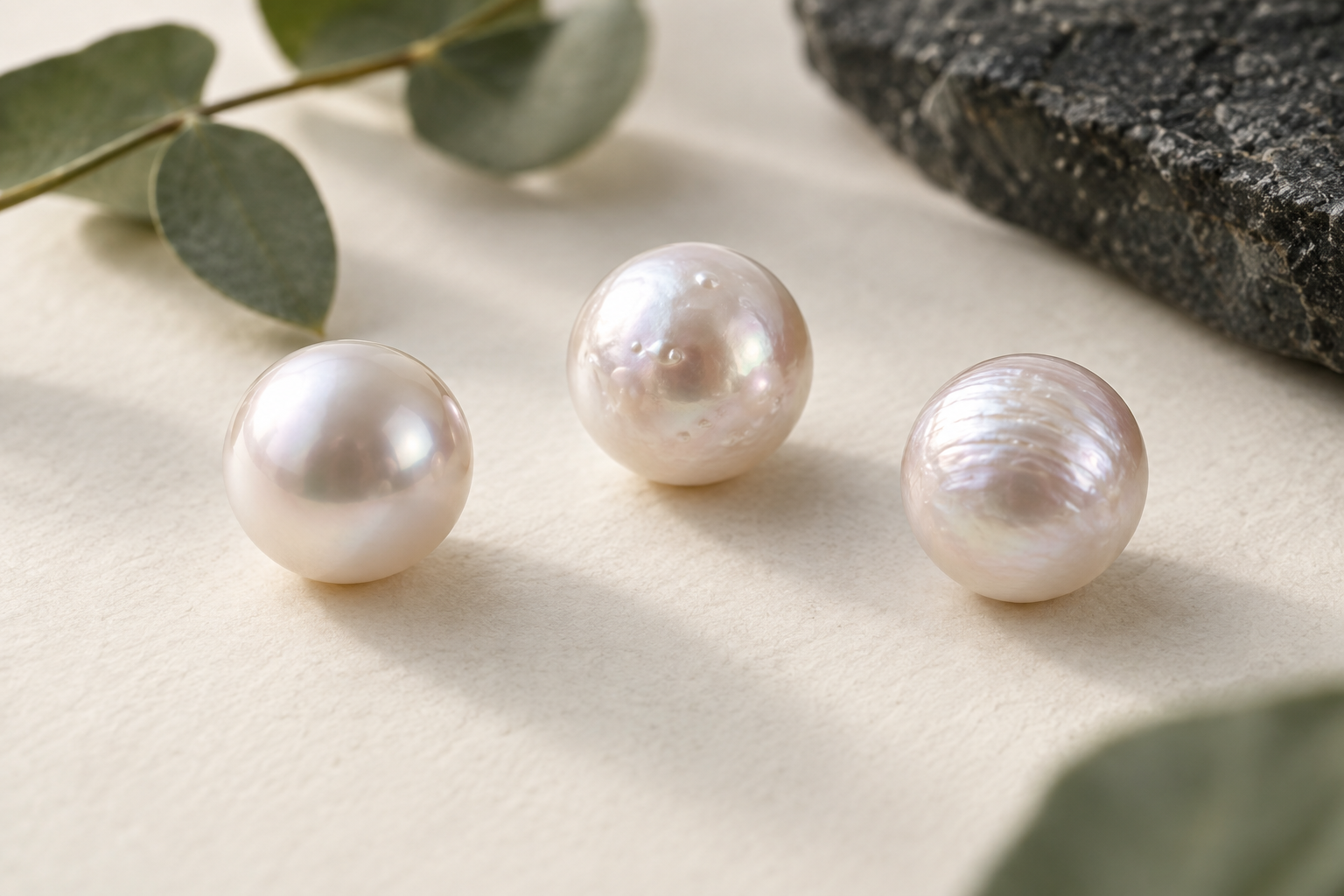
Luster describes the quality, brightness, and sharpness of light reflected from the pearl. In close comparisons between similar pearls, it is often the most immediately important factor. Look at the pearl in soft, neutral light: a lively pearl returns a clear reflection rather than appearing chalky or flat.

Quality
Surface
Most pearls show some natural surface characteristics. Their importance depends on number, size, position, visibility, and whether they affect durability. A pearl does not need a perfectly blank surface to be beautiful, and thoughtful mounting can make a small characteristic far less noticeable.
Quality
Shape and tone
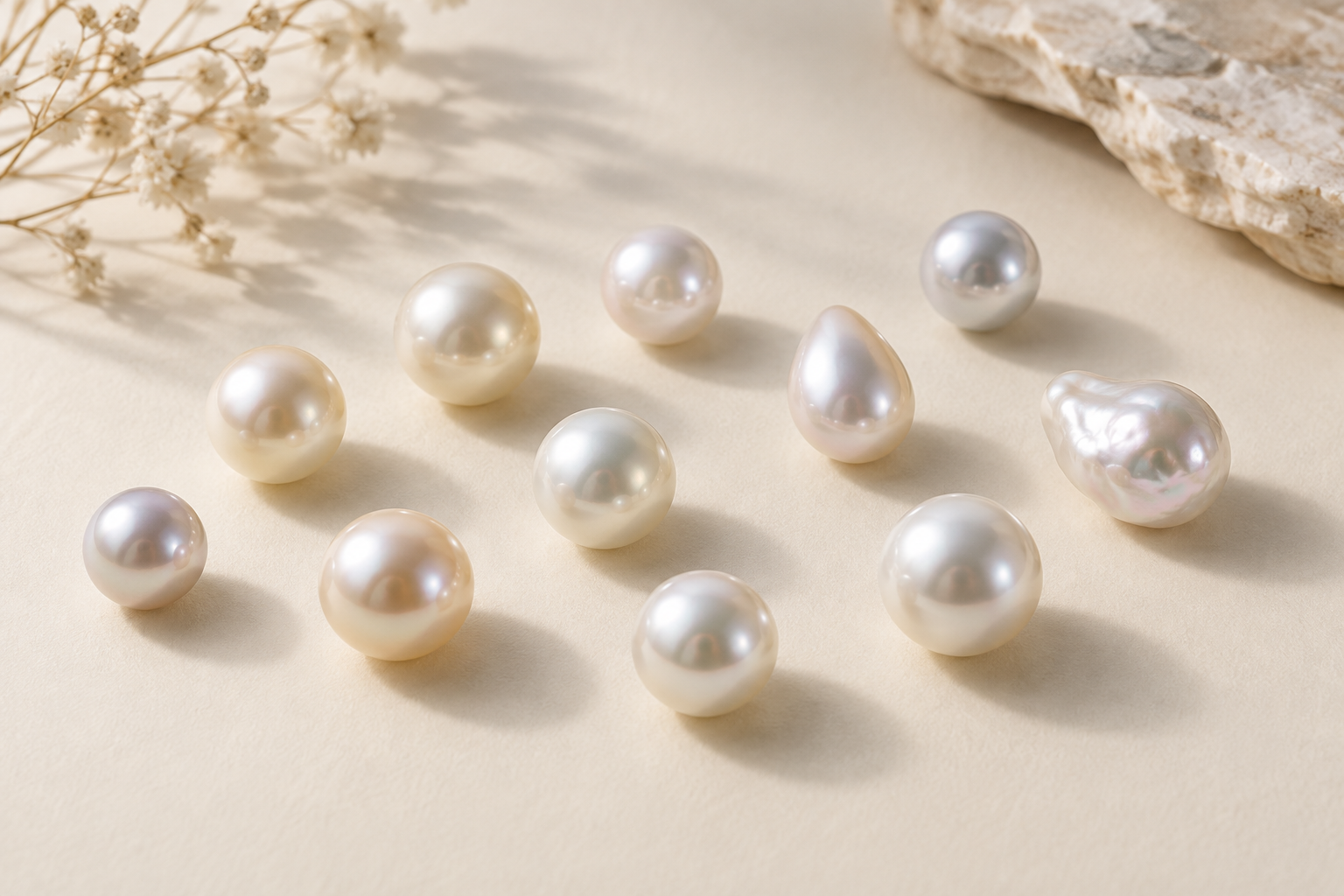
Round pearls are traditionally valued when other factors are equal, while near-round, oval, drop, and baroque shapes can be compelling when the form suits the design. Bodycolor is the main visible color; overtone is a translucent color over that base, often rose, green, silver, or cream. Choose a tone that complements the metal and how you intend to wear the piece.
Choosing
Size
Pearl size is measured in millimeters across the diameter. Within the same type and comparable quality, larger sizes are generally less common. Size changes visual presence more than identity: 5.5–6.0 mm feels delicate and easy for everyday wear, while 7.5–8.0 mm carries a confident classic presence. Photographs can mislead on scale, so check the stated millimeter size against jewelry you already own.

Evidence
Reports
A report should make a product easier to understand, not replace careful reading. Report terminology and scope vary by laboratory, so the document supplied with an individual piece is the controlling record of what was examined. Additional independent reports may be arranged on request for an added fee and extended processing time. If reports matter to your decision, contact us about the specific piece before you order.
Keeping
Care
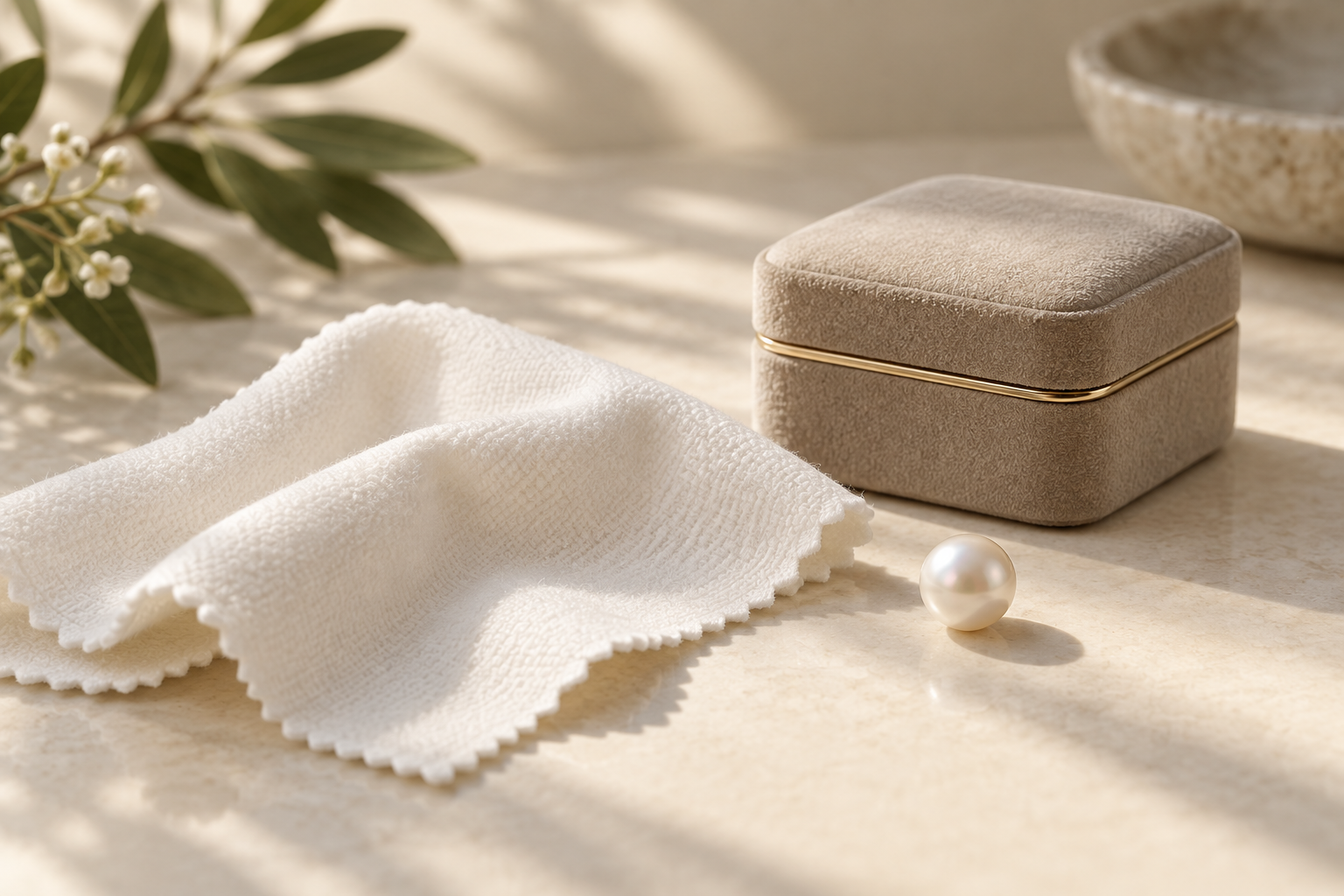
Pearls are relatively soft. Put them on after cosmetics have dried, remove them before bathing, swimming, exercise, or cleaning, and wipe gently with a soft cloth after wearing. Store separately from harder jewelry in a soft pouch. Never use ultrasonic or steam cleaners. For repair questions, contact us with photographs first.
Questions
Frequently asked questions
What size feels right for everyday?
Start with how the piece sits on you, not the number alone. 5.5–6.0 mm reads delicate; 6.5–7.0 mm reads balanced and classic.
How do I compare two similar pearls?
Compare the same type under similar light. Look first at reflection brightness and sharpness, then surface, tone against the metal, stated size, and the report for that exact piece.
What if I am choosing a gift?
Tell us the type of piece, preferred presence, and budget. We aim to respond within 24 hours on Japanese business days.
Pearl knowledge here is general guidance. An individual piece follows its own product facts and accompanying report.
Ask us
Still deciding? Ask for pearl guidance.
Tell us the type of piece, preferred size, and budget. We aim to respond within 24 hours on Japanese business days.